
Measuring engagement through surveys
Measuring engagement through surveys
Employee engagement surveys are a strategic necessity, not just a checkbox activity. This lesson explores the science of measuring engagement using surveys, emphasizing the importance of carefully crafted questions that assess psychological drivers such as autonomy, relatedness, and competence.
You will understand the critical aspects of effective survey design, including avoiding biases, leveraging open-ended questions, and balancing question volume.
Additionally, the lesson delves into analyzing results and ensuring high response rates through trust-building and actionable follow-ups.
By mastering these techniques, HR professionals and managers can transform engagement surveys into powerful tools for organizational success.
What can you expect from this topic?
By the end of this lesson, you will be able to:
- Identify the primary factors that drive employee engagement and how to measure them effectively.
- Understand the role of surveys in capturing engagement insights and the potential pitfalls to avoid.
- Develop actionable strategies to design, analyze, and respond to engagement survey data.
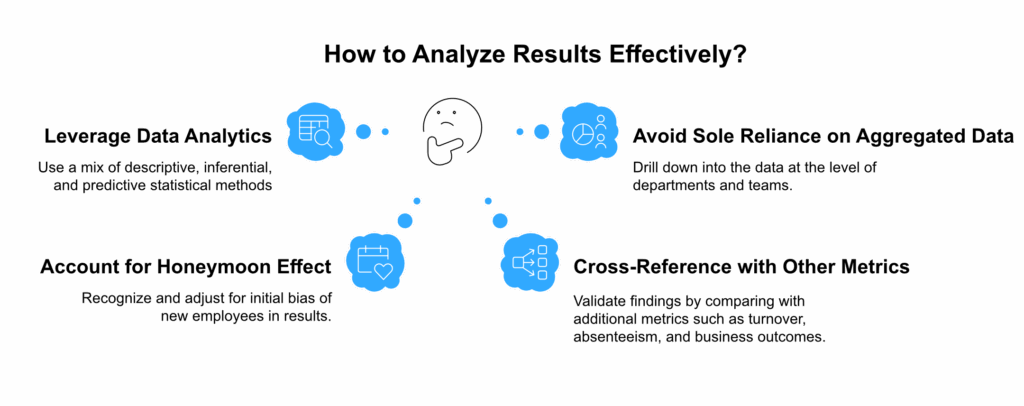
Tips for analyzing engagement survey results
Bibliography
List of notes and sources we reference from.
Notes & Sources
- Michael Mount, Steven Scullen, and Maynard Goff. Understanding the Latent Structure of Job Performance Ratings. 2000. Journal of Applied Psychology. https://pdfs.semanticscholar.org/0a73/fb7d291a407656d4ee4a9b1eb19514abe157.pdf