
Start Here: How to Use Your Leadership Playbook
Start Here: How to Use Your Leadership Playbook
Lead with confidence. Coach with purpose. Adapt through people.
The APM Leadership Playbook is your go-to system for leading in a world where the pressure is real, the pace is accelerating, and traditional management no longer works.
As AI reshapes work and expectations grow, you are not just expected to keep things running. You are expected to coach, empower, and unlock the human strengths your team and your organization need in order to adapt and succeed.
This Playbook is built to help you do exactly that. Whether you are managing a team, leading change, or supporting others to grow, it gives you practical traction through:
- 🎥 Short video lessons with real leadership insight
- 🧠 Quizzes to reflect, diagnose, and think deeper
- 🔧 Plug-and-play tools for real conversations and team moments
You do not need to follow a fixed order. Start with the challenge in front of you, then return when new ones arise.
This page will help you:
- Understand who this Playbook is for
- Learn the principles behind Adaptive Performance Management
- Find your way through the content and tools that fit your goals
Who Is the playbook For?
The APM Leadership Playbook is built for people who lead, whether by role, by influence, or by support. It offers a flexible, practical system for helping others grow, adapt, and contribute with purpose, so that teams perform, people stay engaged, and organizations can respond to change.
When your goal is to drive real impact through people, this Playbook gives you the tools to turn everyday leadership moments into engines of engagement, clarity, and progress.
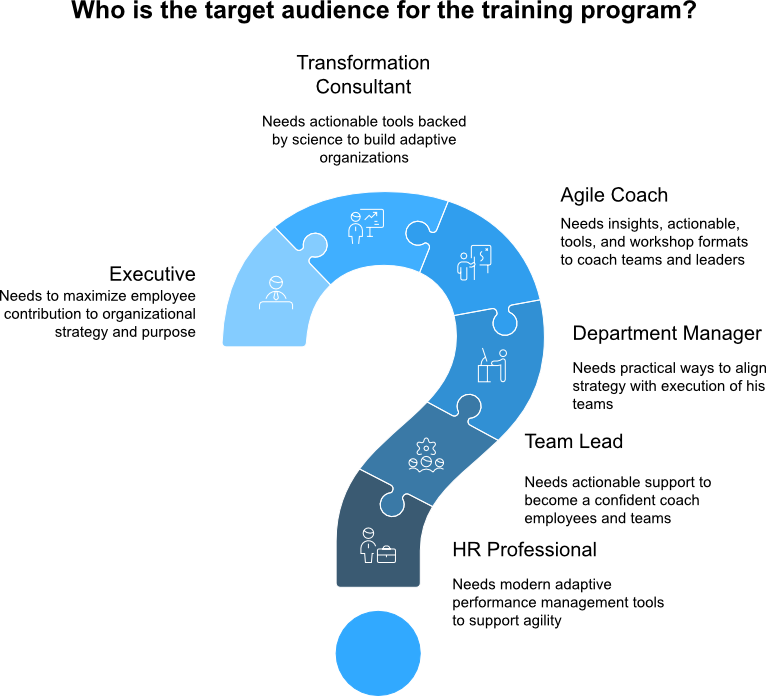
Target audience
For Frontline Managers
You lead where it matters most. Your team looks to you for clarity, trust, and energy. Often with little time, little space, and high expectations.
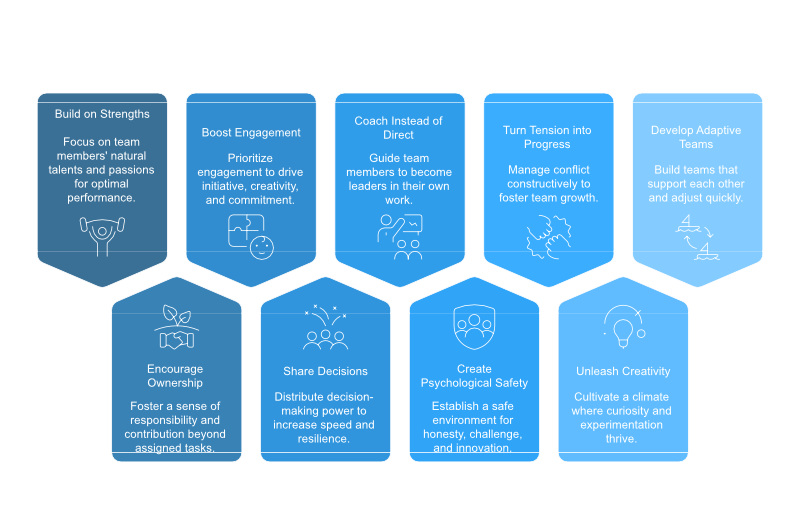
This Playbook helps you:
- Build on team strengths instead of managing around weaknesses
Because people deliver their best work when they do what they are naturally good at and what gives them energy. Not just what matches their role description. - Encourage ownership and contribution, not just compliance
Because adaptive performance comes from people who feel responsible for their impact, not just their tasks. - Boost engagement as a leading signal, not just a side effect
Because when people feel energized, involved, and connected to purpose, they bring more initiative, creativity, and commitment to their work. - Share decisions without losing clarity or control
Because distributed decision making increases speed, engagement, and resilience, especially when the next move is not obvious. - Coach instead of direct
Because your role is not to have all the answers, but to help others grow into leaders of their own work. - Create psychological safety and real trust
Because people will only speak up, challenge, and innovate when they feel safe to be honest and supported when they stretch. - Turn tension into progress through constructive conflict
Because disagreement is inevitable in complex work. How you handle it defines whether your team grows or fractures. - Unleash creativity and innovation in real work moments
Because fresh thinking does not need a brainstorm session. It needs a climate where curiosity and experimentation are allowed to thrive. - Develop adaptive high performing teams
Because performance today is not about rigid plans. It is about people who support each other, adjust quickly, and stay aligned under pressure.
You do not need to be a perfect leader. You just need tools that work when people count on you. This Playbook is built to support you in the moments that matter.
For Coaches and Transformation Professionals
You help others grow. You guide leaders, shape culture, and make change possible. And as the world shifts—faster, more complex, and infused with AI—your role is evolving too.
Many coaches are asking deeper questions. How do I stay relevant? How do I support leadership without pushing another framework? How do I help people succeed when expectations keep rising?
The APM Leadership Playbook offers a practical path forward. It gives you a flexible system you can shape to your style, build into your sessions, and use alongside your existing skills.
You can apply the parts that fit, adapt what you need, and use it to deepen what you already do well. All while helping others unlock the human strengths that matter most now: judgment, empathy, creativity, and contribution.
Use the Playbook to:
- Equip managers with tools they actually want to use
- Introduce a shared language for performance, feedback, and growth
- Support transformation through small, visible shifts that build trust
- Facilitate team sessions and leadership development with real traction
Whether you coach one leader or guide change across a system, the Playbook helps you stay grounded, credible, and adaptive. It supports your work without replacing your voice.
What Is Adaptive Performance Management (APM)?
Adaptive Performance Management is a modern approach to leading people and performance. It was created to meet the demands of a fast-changing world where AI, complexity, and constant pressure have outgrown traditional management systems.
In most organizations, people are still the greatest untapped asset. But outdated practices often limit rather than unlock their potential. Annual reviews, static goals, and top down control leave little room for energy, growth, or ownership.
APM responds to that challenge. It shifts the focus from control to contribution, from role fit to human strengths, and from compliance to engagement. It helps leaders and teams adapt together through clarity, trust, and continuous learning.
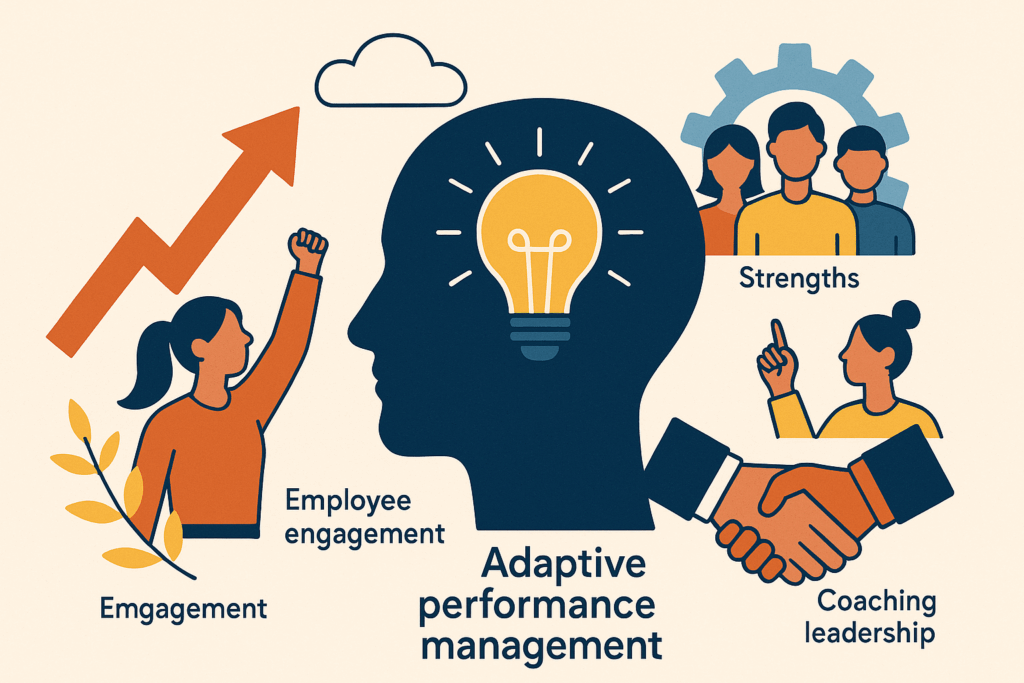
Four pillars
The full APM framework is built on four core foundations:
- Engagement as a leading signal of performance
- Strengths based work that energizes and activates people
- Coaching leadership that builds ownership and growth
- Adaptive high performing teams that align and support each other
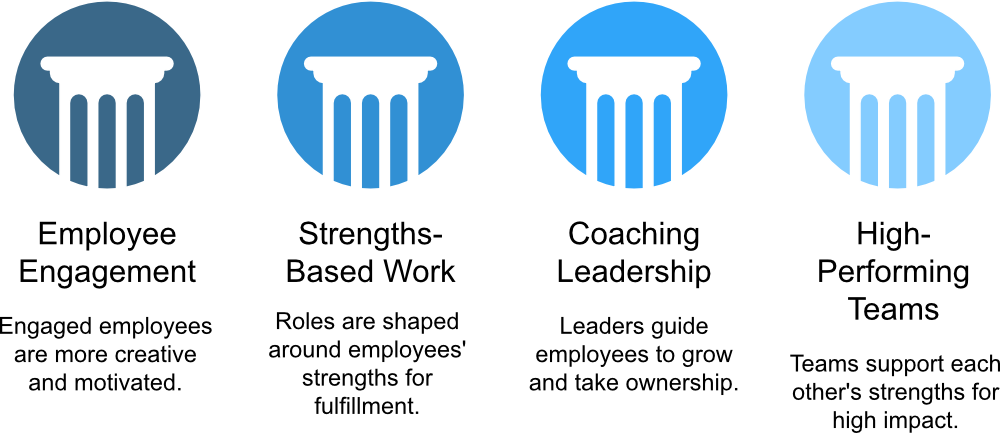
The four pillars of APM
The APM Leadership Playbook
The Playbook you are using now brings this framework to life. It does not require new systems or formal programs. It gives you practical ways to lead in line with APM principles—through conversations, check-ins, decisions, and team moments that matter.
The lessons in this Playbook explore APM in more depth. What you are reading now is just a starting point. You do not need to understand the full theory to begin. You just need to take one step that helps someone thrive.
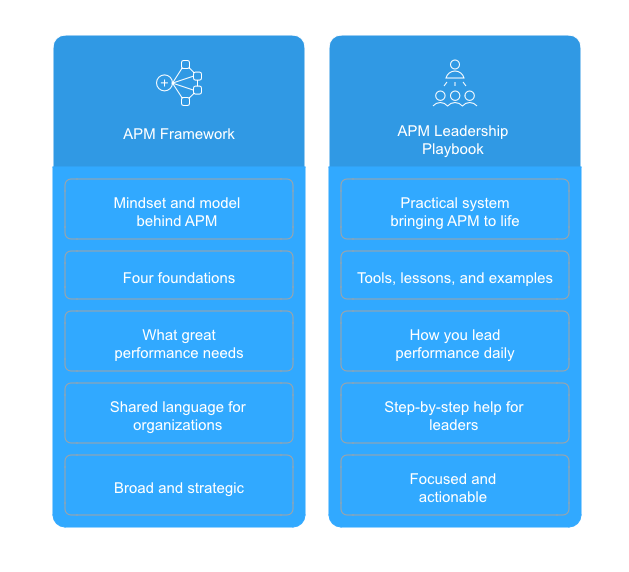
The difference between the APM framework and the Leadership Playbook
Navigating the Playbook
The APM Leadership Playbook is designed for action. Whether you start at the beginning or dive into a single challenge, it offers a structured yet flexible path for learning and applying adaptive leadership.
This section explains how the Playbook is organized, how its core elements relate, and how to find the most relevant entry point for your current need.
The Triad: From Insight to Action
The Playbook is built on a simple but powerful triad:
- Lessons provide clear, bite-sized insights that unpack key APM concepts. They focus on clarity and strategic understanding, not theory.
- Quizzes offer reflection and practical scenarios to deepen insight, test assumptions, and personalize the learning experience.
- Tools and Toolguides are the heart of the Playbook. Each tool turns an idea into something you can use directly—in a 1:1, retro, team session, or leadership conversation.
You can use each element on its own, but they are most powerful when combined. A lesson gives you the why, a quiz helps you reflect on the what, and a tool enables you to take action right away.
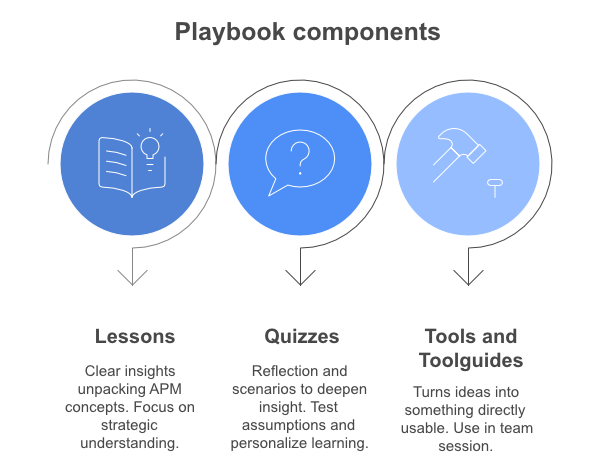
The APM Leadership Playbook components
The Six Core Modules
The Playbook is organized into five core modules. Each builds on the previous one but can also stand alone:
1. The Case for Change
Understand why traditional performance systems no longer serve modern work. This module explores the historical roots of performance management and why challenges like AI, cross-functional work, and constant change demand a new approach grounded in human strengths and adaptability.
2. The Foundations of APM
Learn the core principles, pillars, and beliefs behind Adaptive Performance Management. This module defines what APM is and why it matters, providing the foundation for everything that follows.
3. Engagement as a Leading Indicator
Engagement is not just an HR metric—it is an early signal of performance, motivation, and adaptability. This module helps you measure, interpret, and act on engagement in a way that connects directly to team outcomes.
4. The Strengths Paradigm
Explore how to discover, develop, and align strengths in your team. This module explains how strengths fuel ownership and performance and shows how to make them visible, usable, and valued in daily work.
5. Leveling Up the Frontline Manager
Focus on the daily leadership moments that matter most—coaching, job clarity, feedback, decision-making, and conflict. This module equips managers with the tools and habits that build trust, ownership, and energy.
6. Leveling Up the Organization
Explore how systems, values, and incentives shape culture and performance. This module goes beyond individual behavior and focuses on building adaptive, fair, and human-centered organizations. It covers values alignment, visible meritocracy, and the design of environments that support engagement, autonomy, and growth.
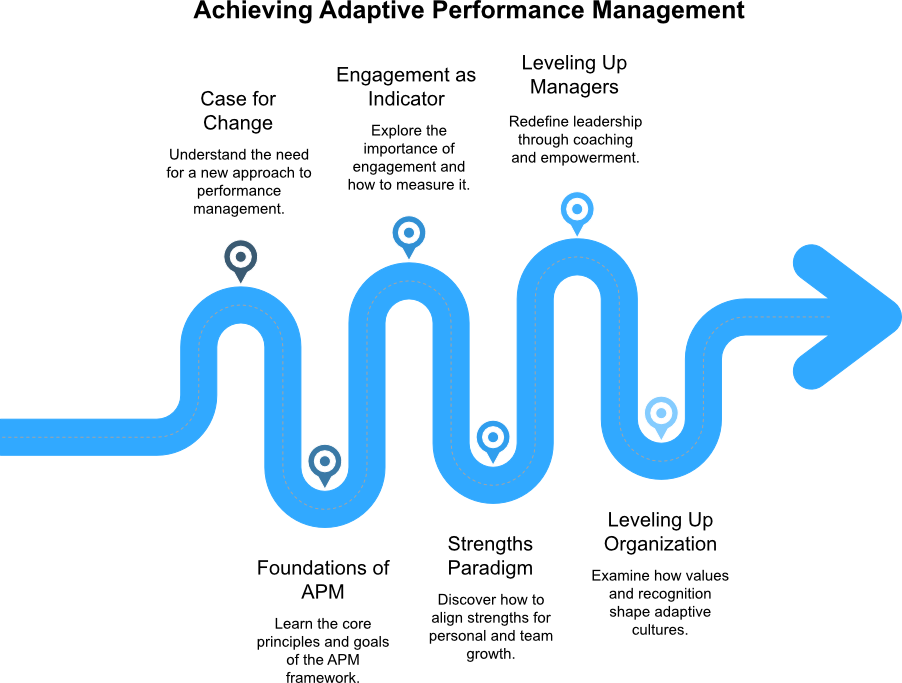
Navigating the course
Entry Points by Leadership Challenge
The Playbook is flexible. Whether you are leading a team, supporting change, or coaching others, you can begin wherever the need is most urgent or meaningful. These entry points help you connect a challenge you face with the right lessons and tools.
Challenge: Your team is drained, disengaged, or going through the motions
Why it matters: When energy drops, performance suffers long before metrics show it. People disconnect quietly.
How the Playbook helps: Engagement is treated as a leading signal of adaptive capacity, not a vague morale booster.
Start with: Engagement as a Leading Indicator
Try tools like:
- Team Energy Pulse
- APM Check-In Guide
- Goal Crafting Playbook
Challenge: Team members are unclear about their roles or feel disconnected from purpose
Why it matters: Lack of clarity leads to frustration, handoffs, and misaligned priorities—especially in complex environments.How the Playbook helps: It reconnects daily work with contribution and system impact.
Start with: Leveling Up the Frontline Manager
Try tools like:
- Chain of Outcome Canvas
- Job Clarity Canvas
- Employee Resolution
Challenge: People are not using their full potential or seem stuck in static roles
Why it matters: Strengths left unused lead to boredom, burnout, and missed opportunities for excellence.
How the Playbook helps: It helps make strengths visible, usable, and valuable in team settings.
Start with: The Strengths Paradigm
Try tools like:
- Love–Loathe Inventory
- Team Strengths Matrix
- LEGO Superpowers Exercise
Challenge: You are facing resistance, tension, or lack of trust in the team
Why it matters: Unspoken conflict slows teams down and weakens collaboration. Trust does not just happen—it must be built.
How the Playbook helps: It gives tools to surface assumptions, make conflict constructive, and build psychological safety.
Start with: Coaching Leadership
Try tools like:
- Team Conflict Charter
- Ladder of Inference
- Mental Model Check
- Conflict Style Profile
Challenge: Your team struggles with decisions or expects you to decide everything
Why it matters: Decision paralysis and manager bottlenecks lead to slow progress and passive teams.
How the Playbook helps: It offers tools to clarify decision rights and grow autonomy without losing direction.
Start with: Leveling Up the Frontline Manager or Leveling Up the Organization
Try tools like:
- Decision-Making Canvas
- Decision Modes Grid
Challenge: You want to shape culture or lead a shift in values, fairness, or recognition
Why it matters: When values are unclear or incentives feel unfair, even strong performers disengage.
How the Playbook helps: It helps leaders and coaches make values visible and systems more fair.
Start with: Leveling Up the Organization
Try tools like:
- Values Alignment Canvas
- Meritocracy Guardrails Checklist
- Planned Dissent Tool
Challenge: You are preparing your team for change, disruption, or AI-driven transformation
Why it matters: Teams cannot adapt unless leaders help them connect their human strengths to future challenges.
How the Playbook helps: It focuses on unlocking what machines cannot replace—judgment, empathy, creativity, and collaboration.
Start with: The Case for Change
Try tools like:
- Human + AI Superpowers Canvas
- Mental Model Check
- Planned Dissent Tool
Challenge: You want to improve how people grow, but formal development plans don’t work
Why it matters: Static growth plans often fail in fast-changing contexts. People need support to grow in real time.
How the Playbook helps: APM moves growth into daily conversations and personal contribution planning.
Start with: Leveling Up the Frontline Manager
Try tools like:
- Employee Resolution
- APM Check-In Guide
- Feedback for Growth
Challenge: Feedback conversations feel vague, infrequent, or uncomfortable
Why it matters: Without real feedback, teams stagnate. Without safety, feedback gets filtered.
How the Playbook helps: It gives direct tools to make feedback timely, safe, and growth-oriented.
Start with: Coaching Leadership
Try tools like:
- SBI Feedback Model
- Ladder of Inference
- Strengths-Based Check-In Prompt Set
Your team looks busy but results are inconsistent or unclear
Why it matters: High activity without alignment leads to burnout or waste. Effort must serve shared goals.
How the Playbook helps: It connects goals to energy, ownership, and visible contribution.
Start with: Engagement as a Leading Indicator or Leveling Up the Frontline Manager
Try tools like:
- Goal Crafting Playbook
- Chain of Outcome Canvas
- Job Clarity Canvas
Challenge: You want more creativity and initiative, but the team plays it safe
Why it matters: Innovation does not happen when people feel judged or uncertain. Without psychological safety and space to think differently, teams protect what exists instead of exploring what is possible.
How the Playbook helps: It creates the conditions for experimentation by building trust, surfacing assumptions, and encouraging safe-to-try thinking.
Start with: Coaching Leadership
Try tools like:
- Mental Model Check
- Planned Dissent Tool
Psychological Safety Workshop
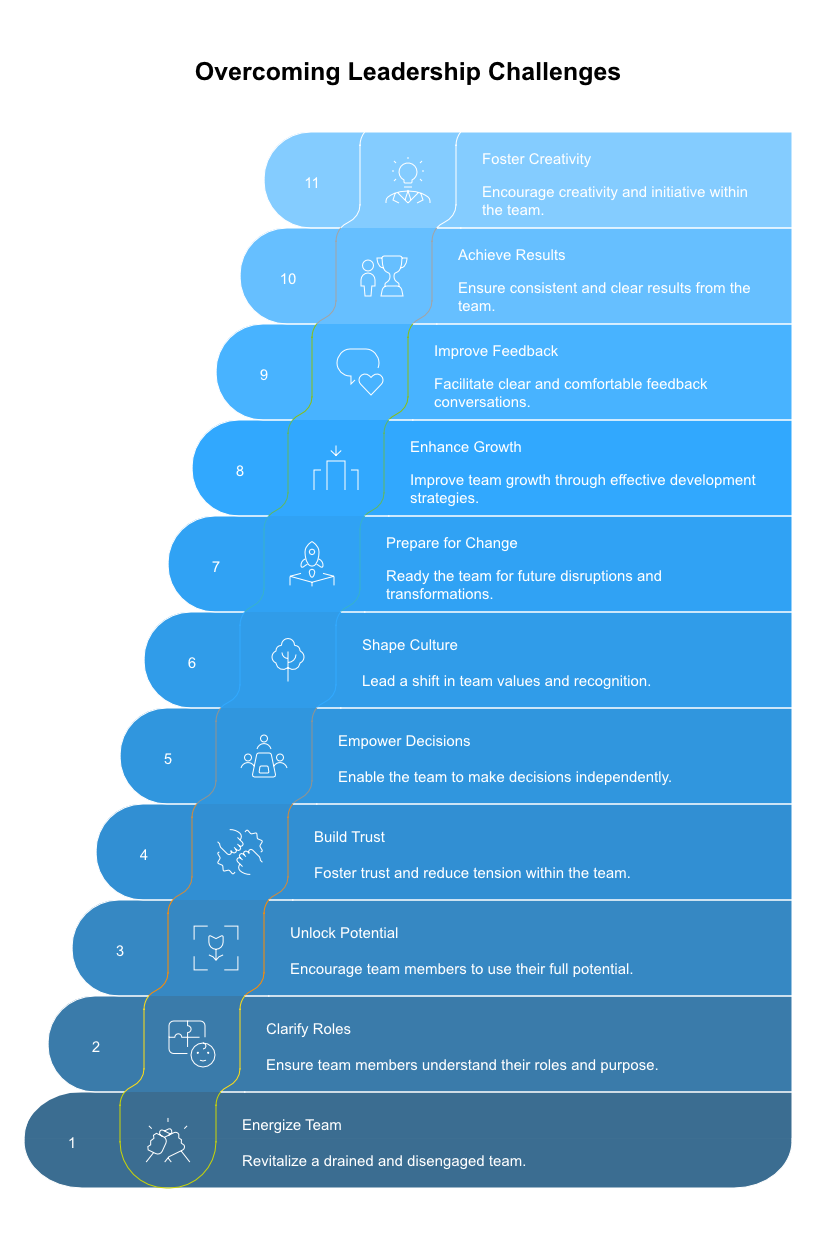
Example leadership challenges as entrypoint for the Playbook
Explore the Full Playbook Overview
If you want to see everything that is included in the Playbook—across all modules, lessons, and tools—you can explore three dedicated pages:
Lesson & Module Overview
See the full structure of the Playbook, including all six modules and every video lesson. Ideal if you want to plan your learning or find a specific topic.
Quiz info
Explore the types of quizzes available that will help you understand, reflect on, practice, and challenge to bridge knowledge into action.
Tool Overview
Browse all tools included in the Playbook, including templates, guides, and usage tips. Each tool is linked to a downloadable guide and grouped by leadership focus.
These pages are always accessible as part of the Playbook, so you can return to them anytime.
Supporting tools: Turn Insight Into Action
APM tools are designed to help you translate insight into action. They bring the Playbook to life—not as a theory, but as something you can actually use with your team, your coachees, or yourself.
Most tools are introduced briefly in the lessons, but they come with a dedicated toolguide that goes deeper. These guides include:
- Clear explanation of the tool’s purpose and principles
- Templates, question sets, or formats you can use immediately
- Coaching tips and facilitation guidance
- Common pitfalls and practical variations
Some tools are simple enough for a quick check-in. Others support full team workshops or change conversations. You can use them individually or combine them to tackle bigger challenges.
Your content goes here. Edit or remove this text inline or in the module Content settings. You can also style every aspect of this content in the module Design settings and even apply custom CSS to this text in the module Advanced settings.
The Playbook Is Yours to Use
The APM Leadership Playbook is not a program to complete. It is a system you can use and return to—whenever you face a new challenge, want to support someone’s growth, or need traction in the moments that matter.
It is built to support real leadership, in real time. Especially when demands are high, clarity is scarce, and your team needs more than direction. They need someone who can unlock their strengths and help them adapt.
You do not need to master everything before you begin. Start with what matters now. Return when you are ready for more.
Every insight you apply, every tool you try, and every conversation you lead with purpose—that is the Playbook in action.
Follow this topic
You can choose to follow this topic in which case you will be notified when there there are updates of the article.