APM tool guide companion guide
Introduction
The APM Leadership Playbook is designed for action. It gives you more than insight. It gives you tools that help you lead differently, right away.
This companion page gives you a clear overview of all downloadable toolguides included in the Playbook. Each tool turns a principle into something you can use in real leadership moments. Whether that means coaching a team, making a tough decision, or designing a better check-in.
You will find:
-
Workshop guides to facilitate powerful conversations in your team or with leaders
-
Assessments to map engagement, values alignment, or conflict style
-
Checklists to support consistent and clear practices
-
How-to guides for applying APM tools in your daily leadership
-
Reflection formats to uncover beliefs, assumptions, and strengths
Tools are grouped by theme and linked to the relevant module and lesson within the Playbook. Each entry includes a summary of the tool’s purpose, what it contains, and when to use it.
Use this companion to explore, select, and apply the tools that match your current challenge. You do not need permission, certification, or a full team rollout. You just need a moment where the tool fits.
The Case for Change
Why traditional performance management no longer fits today’s dynamic, human-centered work.
Lesson: Unlock Human Superpowers in the Age of AI
Tool: The Human + AI Superpowers Canvas
Reflective tool to explore eight essential human capabilities and how AI can amplify them. Helps teams identify strengths, assess current support, and generate ideas for meaningful human-AI collaboration. Encourages organizations to not only recognize key human qualities but also take deliberate steps to support environments where human and artificial capabilities can complement and elevate each other.

Engagement Drives Organizational Success
How engagement drives performance and how to measure, understand, and strengthen it.
No Specific Lesson
Tool: Engage to Adapt Guide
A comprehensive guide to diagnosing, enabling, and measuring engagement as a leading indicator of adaptive performance. Explores the difference between compliance and true engagement using the Compliance Ladder. Draws on Self-Determination Theory to explain the psychological drivers of engagement—autonomy, competence, and relatedness—and combines this with practical guidance to identify and address common engagement barriers. Includes survey tips, real-time feedback techniques, and alternative measurement methods.

Tool: Team Energy Pulse
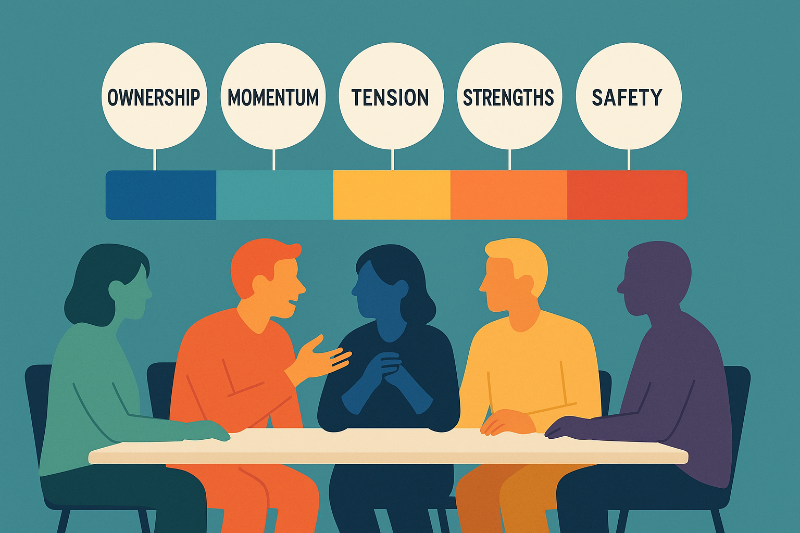
A lightweight reflection tool that helps teams sense how they’re really doing, before issues show up in performance or morale. The Pulse uses five simple signals (ownership, momentum, tension, strengths, safety) to guide regular conversations about team dynamics and energy. It’s not a survey or assessment, but a shared habit that helps teams notice shifts early, build trust, and take meaningful action together.
Shifting to a Strengths-Based Approach
Why focusing on strengths unlocks performance and how to do it practically.
Lesson: Why Strengths Matter
Tool: Assess Your Performance Management Style
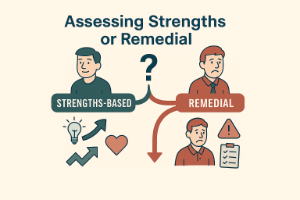
A diagnostic tool to help organizations reflect on the dominant mindset in their performance practices. It reveals whether the current style emphasizes fixing weaknesses or leveraging strengths. The tool includes a set of reflective questions, a scoring system, and interpretation guidelines to spark dialogue and explore how performance management practices impact engagement, development, and culture.
Lesson: How to Assess Strengths
Tool: Love-Loath
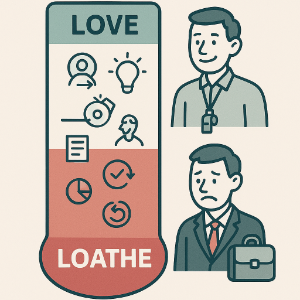
A reflective self-tracking method to discover personal strengths by identifying energizing and draining activities. Participants track daily tasks over a week, noting which ones they ‘love’ (feel energized by) and ‘loathe’ (feel drained by). The resulting list helps spot patterns and reveal hidden strengths. The tool includes prompts to interpret results, brainstorm small experiments to shift work toward strengths, and initiate peer conversations to create better alignment with one’s natural energy.
Tool: Lego Superpowers
Playful, hands-on team exercise where individuals build symbolic LEGO models that represent their personal strengths. The act of building supports creative self-expression, while teammates guess and reflect on each other’s creations to uncover shared insights. This tool deepens mutual understanding, encourages positive recognition, and fosters a culture of psychological safety through fun and intentional dialogue.

Tool: HIGH5 Assessment
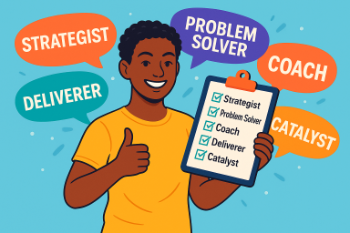
A free, research-based strengths test that provides individuals with a profile of their top five personal strengths. Offers shared language for teams to explore complementary strengths and build appreciation for diverse contributions. Useful as a starting point for self-awareness, team conversations, and integrating strengths into performance practices.
Lesson: Strengths in Team Dynamics
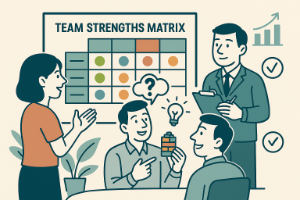
Tool: Team Strengths Matrix
A practical tool to visualize and activate team strengths. The matrix helps teams identify individual capabilities, assess energy and confidence levels for each strength, and uncover complementary pairings or strengths gaps. It supports intentional task distribution, clearer role design, and stronger peer collaboration. Includes instructions on how to build the matrix, use color coding for self-assessment, and facilitate reflection to translate insights into collective action.
Coaching Leadership
Helping managers and coaches adopt empowering, adaptive leadership behaviors.
Lesson: Choose a Leadership Stance Based on Context
Tool: The Adaptive Leadership Stances Guide
In-depth guide to nine distinct leadership stances that managers and coaches can flexibly adopt based on context. Each stance—such as Coach, Adviser, Facilitator, or Visionary—supports a different mix of focus on growth and results. The guide explains how to recognize which stance fits a situation, how to shift between them intentionally, and what behaviors and phrases bring each stance to life. Includes practical examples and watch-outs to support leadership development and adaptive team dynamics.

Lesson: Build Psychological Safety
Tool: Modeling Curiosity Practice Guide
A practical guide that helps leaders and coaches model curiosity as a core behavior to foster psychological safety. It introduces the concept of curiosity as a visible signal of openness and trust, based on research by Amy Edmondson. The tool includes daily and weekly habits, techniques for public modeling, a rich set of question prompts, and common pitfalls to avoid. It encourages reflection and practice to make curiosity a natural part of leadership presence and team culture.

Tool: Build Psychological Safety Workshop
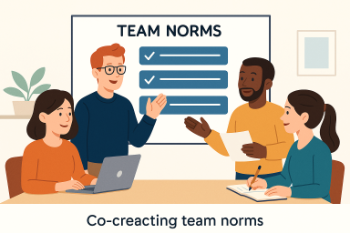
A comprehensive guide to facilitating a team conversation about psychological safety. The tool helps teams understand what psychological safety looks like in practice and co-create norms that support speaking up, taking risks, and learning together. Includes a clear step-by-step structure, facilitation guidance, sample activities, and tips for managing group dynamics. Designed to create shared language and ownership around psychological safety, while equipping leaders with the confidence to lead open, trust-building dialogues.
Lesson: The Empowerment Shift
Tool: Empowered to Decide Guide
A comprehensive guide to distributed decision-making in adaptive environments. Helps teams and leaders clarify decision ownership, navigate complexity, and reduce bottlenecks. Includes the Decision-Making Canvas to map decision scope, authority, and criteria; the Decision Modes to match decision style to context (decide, inform, intent, consult, delegate); and the Decision Matrix to clarify who is involved and how. Offers practical steps, examples, and facilitation tips to improve clarity and alignment in decision-making processes.
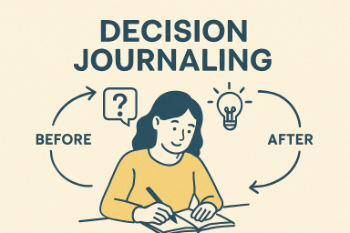
Tool: Decision Journaling
A simple and effective tool to cultivate reflective decision-making habits. Encourages individuals and teams to capture the reasoning, assumptions, and outcomes of key decisions over time. Supports learning from experience, improving future decision quality, and identifying hidden biases or patterns.
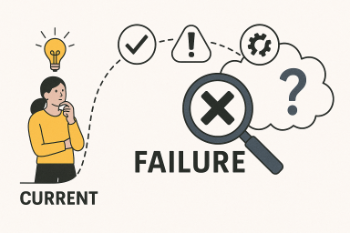
Tool: The Pre-Mortem Decision Review
A forward-looking risk assessment tool to improve strategic decision-making. It prompts teams to imagine a future failure, identify what might have caused it, and plan actions to mitigate those risks in advance. Encourages proactive thinking, psychological safety, and shared ownership of potential blind spots.
Lesson: Coach to Master Conflict
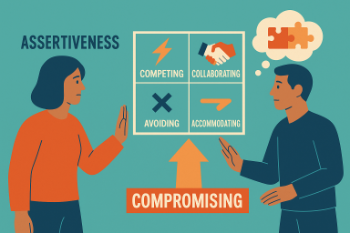
Tool: Thomas Kilmann Instrument
APM-style adaptation of the TKI conflict styles framework, helping individuals and teams understand their preferred conflict responses—competing, accommodating, avoiding, compromising, or collaborating. Includes a self-assessment, practical examples of when each style is effective, and guidance for team reflection to improve conflict literacy and adapt responses to different situations.
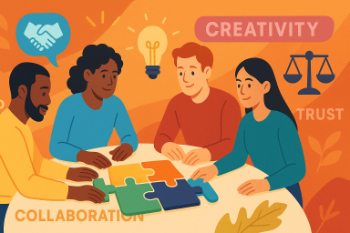
Tool: Team Conflict Charter
A structured tool that helps teams define shared norms and agreements for how to engage with conflict constructively. Encourages open dialogue about team dynamics, preferred conflict responses, and boundaries for respectful debate. Includes a step-by-step process for co-creation, sample prompts, and facilitation guidance to foster psychological safety and alignment in moments of tension.
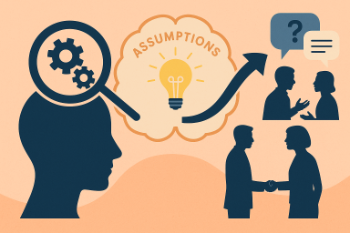
Tool: Ladder of Inference
A reflective tool that helps individuals and teams uncover and challenge hidden assumptions in thinking and communication. Based on Chris Argyris’ model, it visually maps the mental steps people take from observing data to drawing conclusions—helping to prevent premature judgments and flawed assumptions. Includes a clear visual ladder, guiding questions to slow down automatic reasoning, and group facilitation tips to support shared learning and deeper dialogue.

Tool: Mental Model Check
A reflection tool to surface and reframe limiting assumptions that may distort perception and decision-making. Encourages individuals and teams to examine the beliefs driving their actions and explore alternative interpretations. Helps prevent rigid thinking and jumping to conclusions by promoting curiosity, awareness, and intentional reframing. Includes diagnostic prompts and tips to shift perspective.
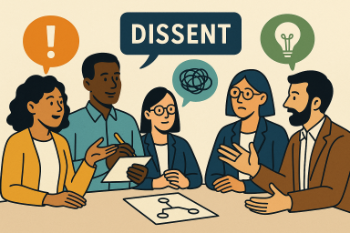
Tool: Planned Dissent
A structured approach to making dissent an intentional part of team dialogue. Encourages diverse perspectives, challenges groupthink, and raises hidden risks before decisions are finalized. Includes techniques such as assigning an ‘advocate’s devil’ role to challenge assumptions, framing questions constructively, and debriefing disagreements to strengthen psychological safety and team learning.
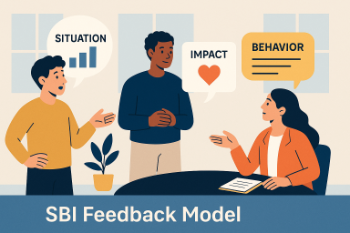
Tool: SBI Feedback Model for Peer Feedback
Peer-to-peer adaptation of the SBI (Situation-Behavior-Impact) feedback model, designed to support open, respectful feedback within teams. Encourages clear, non-evaluative language focused on observable behaviors and their impact. Includes guidance for one-on-one conversations and formats for structured group reflections to strengthen mutual learning and accountability.
Clarify Jobs
Creating clarity around purpose, contribution, and autonomy in individual roles.
Lesson: Corporate Identity
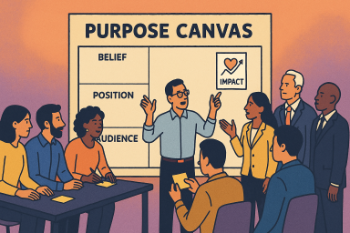
Tool: The Purpose Canvas
A structured visual tool to articulate and align a team’s or organization’s core purpose. Helps clarify why the team exists, who it serves, and how it creates value. By anchoring strategy and decision-making in shared intent, it fosters motivation, alignment, and meaningful contribution. Includes prompts to guide collaborative exploration of purpose across teams or departments.
Lesson: Craft Purposeful Cascading Goals
Tool: The Goal Crafting Playbook
A practical toolkit for setting goals that connect individual contributions to broader team and organizational purpose. Helps teams move beyond compliance-driven targets by focusing on meaning, alignment, and motivation. Includes step-by-step guidance, coaching prompts, and editable templates to craft goals that inspire ownership and adaptability.
No Specific Lesson
Tool: Assessing Job Clarity
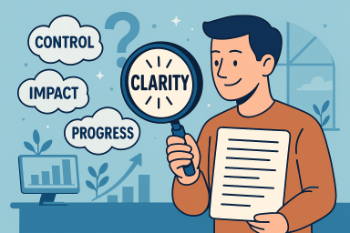
A diagnostic tool to evaluate job clarity from the employee’s perspective. Goes beyond role expectations and goals to assess three core dimensions of clarity: the ability to measure your own progress, understand how your job matters to others, and feel control over how the work is done. Supports reflective discussion and continuous improvement in job design, motivation, and alignment.
Tool: Chain of Outcome Canvas
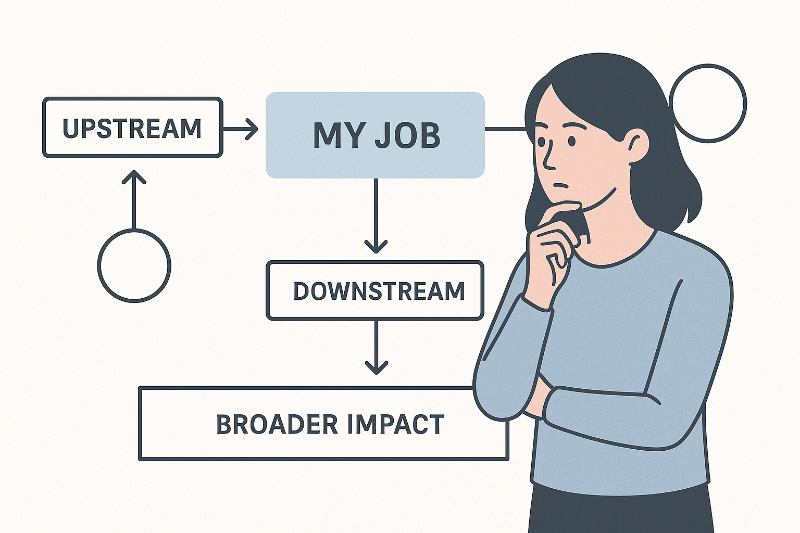
Uncover how your job creates value across the system. This canvas helps employees map the ripple effects of their work—upstream, downstream, and beyond. By zooming out from daily tasks, they gain insight into their true contribution, potential friction points, and opportunities for collaboration. Use it in check-ins, retros, or onboarding to strengthen purpose, alignment, and system thinking in an accessible way.
Ditch Performance Reviews. Start Frequent Check-Ins
Replacing static reviews with meaningful, adaptive check-in conversations.
Lesson: Effective Check-In Meetings
Tool: The APM Check-In Guide
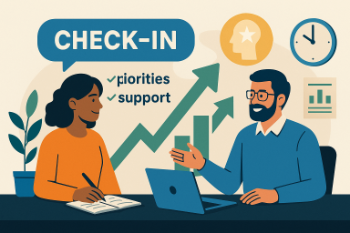
A practical coaching tool to help managers hold adaptive, high-impact conversations with their team members. Unlike traditional review meetings, check-ins focus on support rather than evaluation. They offer a recurring opportunity to explore strengths, motivation, and learning needs, helping employees make progress without fear of judgment. Includes a simple structure and sample prompts to uncover goals, remove blockers, and align efforts—fostering trust, growth, and responsiveness in day-to-day performance.
Level-Up the Organization
Embedding fair systems, values alignment, and reciprocal meritocracy.
Lesson: Balance Values and Performance
Tool: The Values Alignment Assessment
A Likert-scale diagnostic tool designed to assess whether an organization’s stated values are truly shared and enacted in everyday behavior. It highlights gaps between formal values and lived experience, helping teams and leaders identify where cultural alignment is strong—and where it needs attention. Supports value-based decision-making, cultural reflection, and prioritization of organizational integrity. Useful in team sessions, leadership reviews, or broader values alignment efforts.
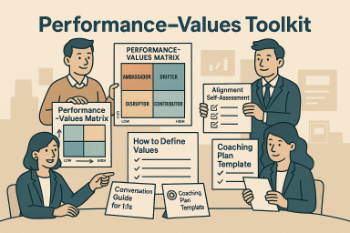
Tool: The Performance–Values Matrix Toolkit
A practical tool that helps leaders evaluate employee performance not only by results but also by how those results align with organizational values. Encourages fair and balanced decisions by plotting individuals on a matrix of performance and values alignment. Supports conversations about recognition, development needs, and team fit—especially in cases where high performance may come at the expense of shared values, or strong values alignment is present but results are lacking.
Lesson: Build a Reciprocal Meritocracy
Tool: The Meritocracy Guardrails Checklist
A strategic checklist to define and reinforce the conditions for a reciprocal meritocracy—where opportunities, infuence, and responsibilities are earned through contribution, not hierarchy. The tool outlines system-level guardrails to safeguard fairness, inclusion, and clarity, helping organizations avoid favoritism, bias, or unequal access to recognition. It supports leaders in designing transparent, principle-based structures that elevate performance without undermining trust or equity.

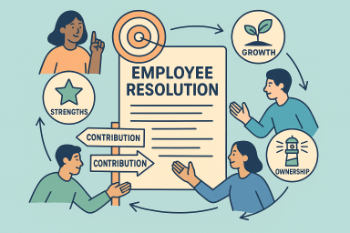
Tool: Employee Resolution
A personal contribution plan that replaces traditional, manager-driven growth plans with a dynamic, employee-owned approach. Encourages individuals to define how they want to contribute, based on their strengths, goals, and current team or organizational needs. Promotes peer collaboration, invites input from colleagues, and supports alignment through ongoing reflection rather than static targets. Serves as a living document that integrates with APM’s principles of reciprocal meritocracy, shared responsibility, and strengths-based growth.