
Foundational bodies of knowledge
Foundational bodies of knowledge
This short text-based lesson provides an overview of the scientific roots of APM. While we won’t cover these in detail, they are the scientific foundation that all APM practices rely on. Understanding the foundational bodies of knowledge helps you appreciate the depth and validity of the APM framework.
What can you expect from this topic?
- Understand the foundational bodies of knowledge that provides APM it’s scientific base.
Why Foundational Bodies of Knowledge Matter
The Adaptive Performance Management (APM) framework is not built in isolation. It draws from well-established fields of study that provide scientific credibility and actionable insights. Understanding the foundational bodies of knowledge that support APM helps practitioners appreciate its depth and ensures its implementation aligns with proven principles.
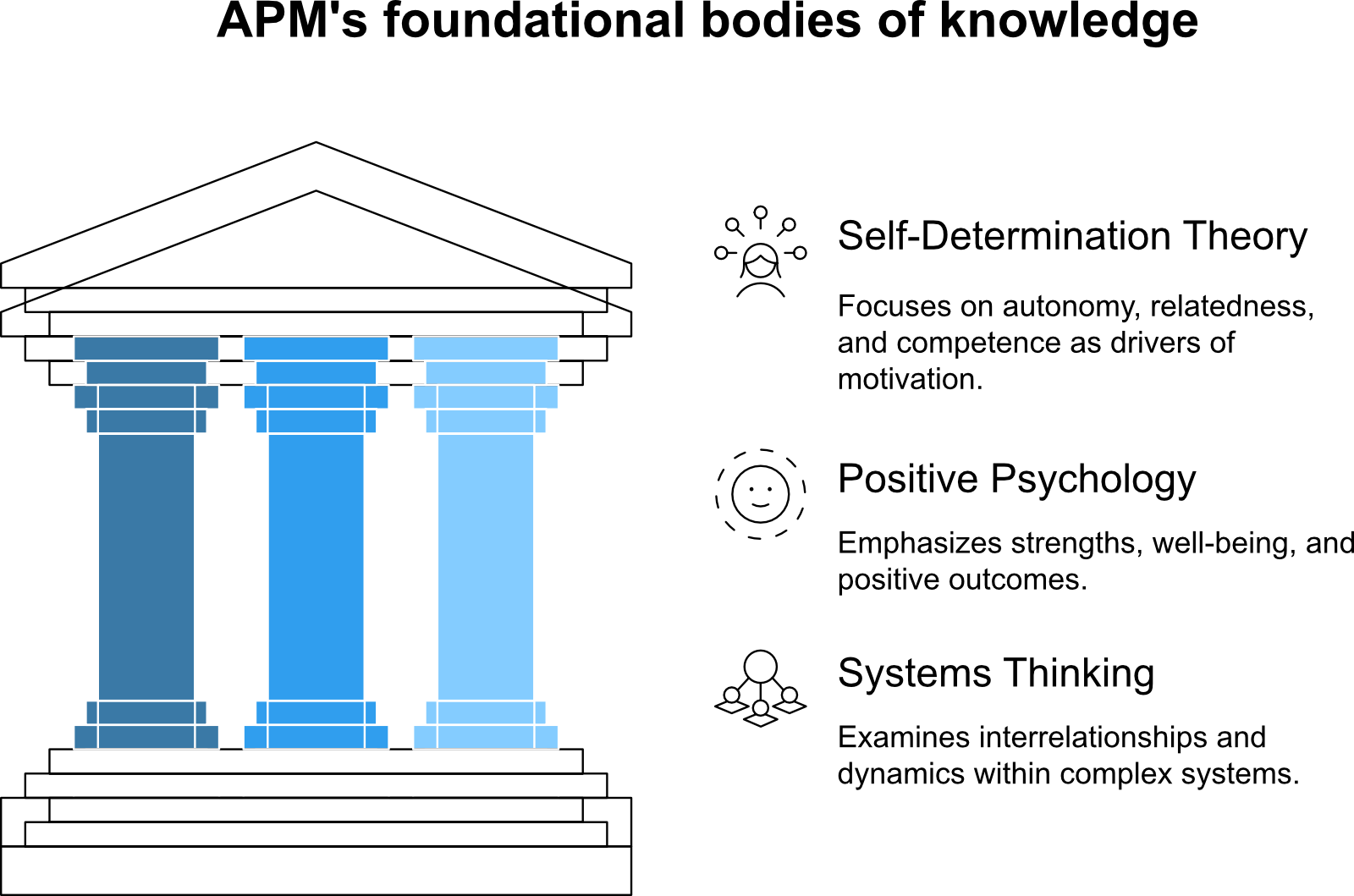
These disciplines—Self-Determination Theory, Positive Psychology, and Systems Thinking—serve as pillars that guide the design and application of APM, making it a robust and adaptive framework for modern workplaces.
Foundational bodies of knowledge
Self-Determination Theory (SDT)
What It Is
A psychological framework that identifies three fundamental human needs—autonomy, relatedness, and competence—as the drivers of motivation and well-being.
Relevance to APM
APM integrates SDT by creating conditions where employees experience:
- Autonomy: The freedom to make decisions about their work.
- Relatedness: A sense of connection and meaningful contribution to their team and organization.
- Competence: Opportunities to build and demonstrate mastery in their roles.
Impact
This approach shifts performance management from compliance-driven to engagement-driven, fostering intrinsic motivation and sustainable performance
Positive Psychology
What It Is
The scientific study of what makes life worth living, focusing on strengths, well-being, and positive outcomes rather than deficits.
Relevance to APM
APM adopts a strengths-based perspective:
- Encouraging employees to identify, develop, and leverage their strengths.
- Building systems that focus on what employees excel at rather than solely addressing weaknesses.
Impact
By emphasizing positive reinforcement and meaningful work within individual strengths, APM enhances employee engagement and overall organizational resilience. It support maximizing the unique strengths humans have over AI.
Systems Thinking
What It Is
A holistic approach to understanding complex systems by examining the interrelationships and dynamics among components rather than focusing on isolated parts.
Relevance to APM
Systems Thinking underpins APM’s focus on:
- Collaboration across teams and departments to optimize the flow of value.
- Avoiding local optimization that benefits individual units at the expense of overall performance.
- Designing adaptive systems that can evolve with changing organizational and market needs.
Impact
This perspective ensures that performance management practices align with the interconnected nature of modern work environments, improving agility and collective performance.
Summary
By embedding the principles of Self-Determination Theory, Positive Psychology, and Systems Thinking, APM transcends traditional performance management. These foundational bodies of knowledge provide a scientific basis for fostering employee engagement, leveraging strengths, and enabling organizations to adapt effectively to complexity and change. Understanding these foundations equips APM practitioners with a deeper appreciation for the framework and empowers them to implement it successfully.